
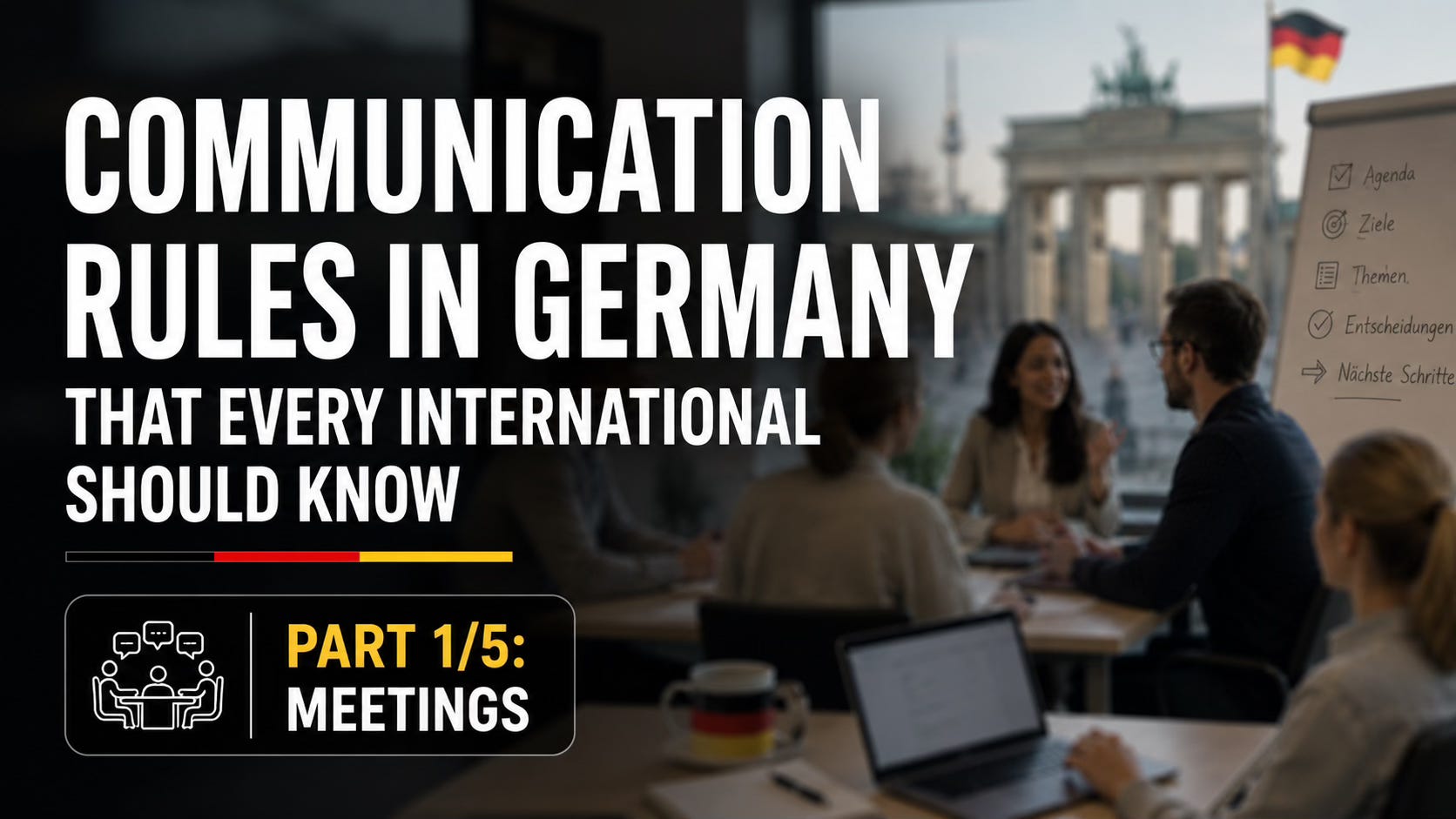
Communication Rules in Germany That Every International Professional Should Know - Part 1/5: Meetings
25 Rules That Make Communication Easier at German Workplaces

Many of you wrote to me after my “Unwritten Rules in Germany” series.
You told me it helped you understand German workplaces better, feel more confident, prepare for interviews, settle into your new job, and avoid mistakes you didn’t even know you were making.
Some of you said it helped you get hired.
Others said it finally explained why certain situations at work had felt so confusing.
That feedback showed me something important.
Understanding German workplace culture is not a “nice to have.”
It can directly influence your career.
That’s why I’m starting a new five-part series that goes one step further.
25 Rules That Make Communication Easier at German Workplaces
Part 1 – Meetings
Part 2 – Emails & Chat
Part 3 – Working with Your Manager
Part 4 – Working with Colleagues
Part 5 – Difficult Conversations
Communication.
Because this is where many misunderstandings begin.
You say one thing.
Your German or European colleagues understand something completely different.
Or you leave a meeting wondering why your idea was ignored.
Why your manager wasn’t convinced.
Why your contribution wasn’t recognised.
Or perhaps you’ve been applying for months without understanding why you’re not getting interviews, promotions, or opportunities, even though you know you’re technically qualified.
Communication is one of the biggest competitive advantages in Germany, in Europe and also in America.
And it’s often underestimated.
After more than 15 years in recruitment in Germany in global environment and thousands of interviews with both German and international professionals, I see the same pattern again and again.
Highly qualified international professionals are rejected because they are perceived as not being the right cultural fit.
Brilliant engineers stay silent in meetings because they don’t know when or how to contribute.
Experienced data scientists present excellent analyses but lose their audience because their message isn’t structured in the way German decision-makers expect.
Project managers avoid challenging unrealistic deadlines because they don’t want to create conflict.
Product managers explain their ideas brilliantly—but with too much context, causing decision-makers to lose the key message.
None of these people lack technical expertise.
Many are among the strongest professionals in the room.
Yet they don’t reach their full potential in Germany.
Not because they are less capable.
But because they communicate in ways that don’t match what German colleagues, managers, recruiters, and stakeholders expect.
The frustrating part?
Almost nobody tells you this.
Instead, you hear vague feedback such as:
“We chose another candidate.”
“You’re not quite the right fit.”
“We were looking for someone with stronger communication skills.”
“The presentation wasn’t convincing enough.”
But what does that actually mean?
What should you have done differently?
Very few people explain it.
That’s exactly why I created this series.
Not to teach you German grammar.
Not to tell you to become “more German.”
But to help you understand the communication habits that many German workplaces expect and that can make your everyday work, your meetings, your interviews, and ultimately your career much easier.
We’ll start where many important impressions are made:
Part 1 - Meetings
What you will learn:
The five unwritten rules that shape how people are judged in German workplace meetings.
Concrete examples from software, data, engineering, product, project, and technical teams.
Professional phrases you can use to contribute, disagree, raise risks, and make recommendations.
The most common meeting mistakes international professionals make and how to avoid them.
